The idea
Clinics lose appointments to phone tag. Relai moves booking to the channel patients already use: patients book, reschedule and cancel over WhatsApp, and the clinic gets an admin panel over the top of it.
What's in it
- Flexible WhatsApp connection — use the clinic's existing number or a dedicated business number
- AI-assisted replies for routine booking questions
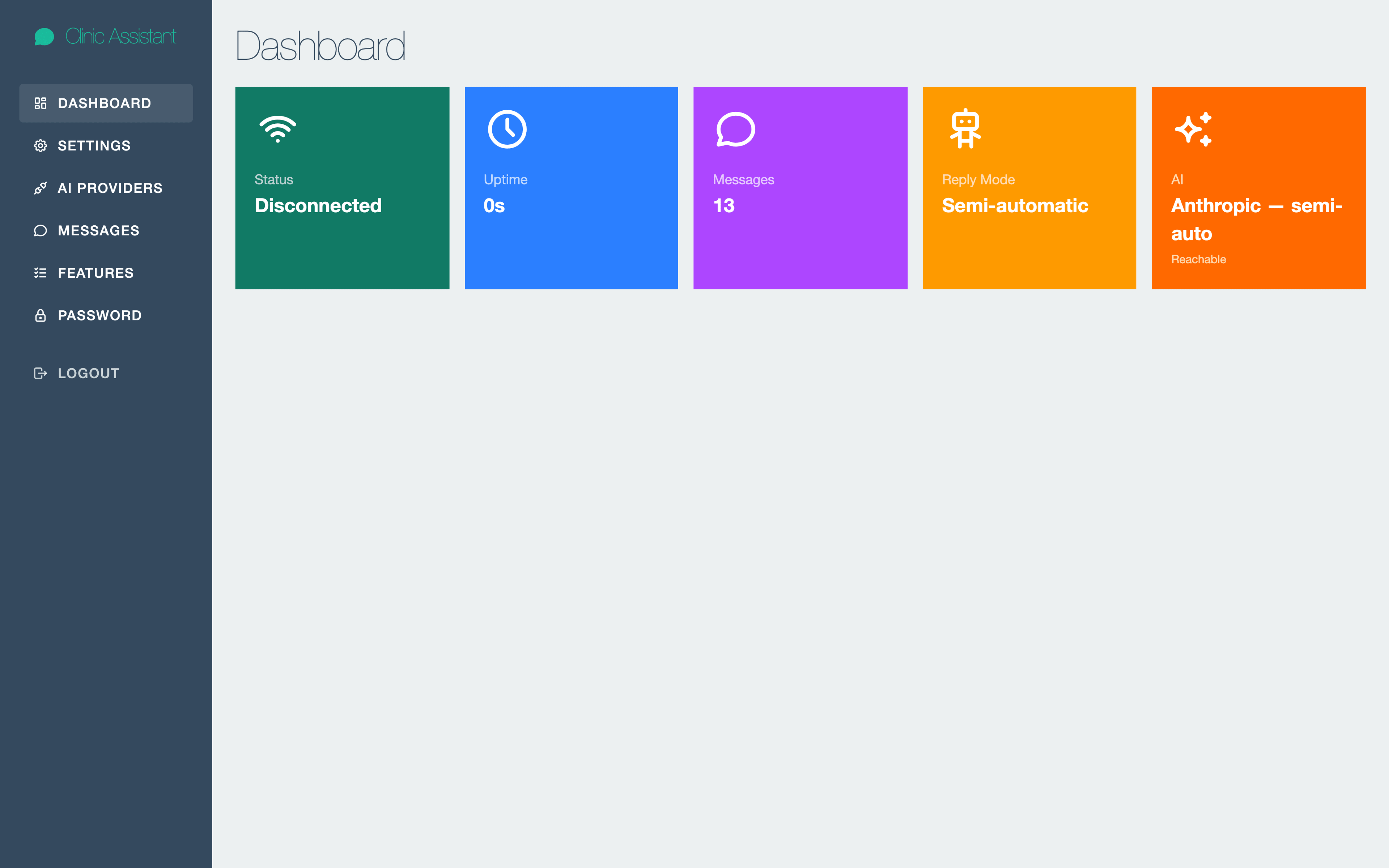
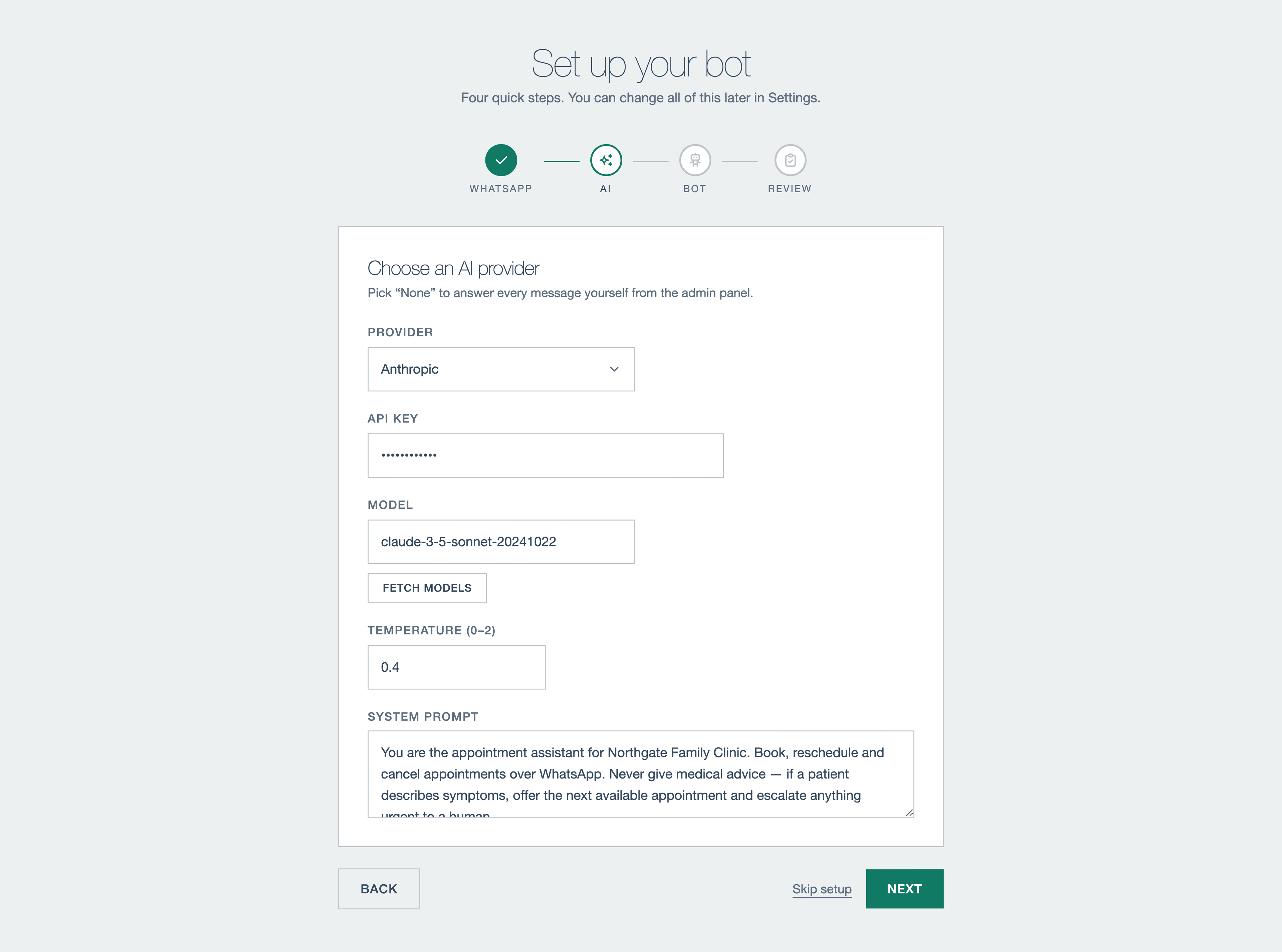
- Three reply modes — auto (AI replies immediately), semiauto (AI drafts, a human approves), and manual (reply from the admin panel)
- Admin dashboard covering setup, settings, a unified message view, and team access
- Automatic reminders ahead of appointments
- Conversation handoff whenever a patient needs a person
Human control comes first
Reply mode is set per conversation rather than across the whole clinic. Routine booking can stay automatic while a staff member keeps control of a sensitive or unusual thread.
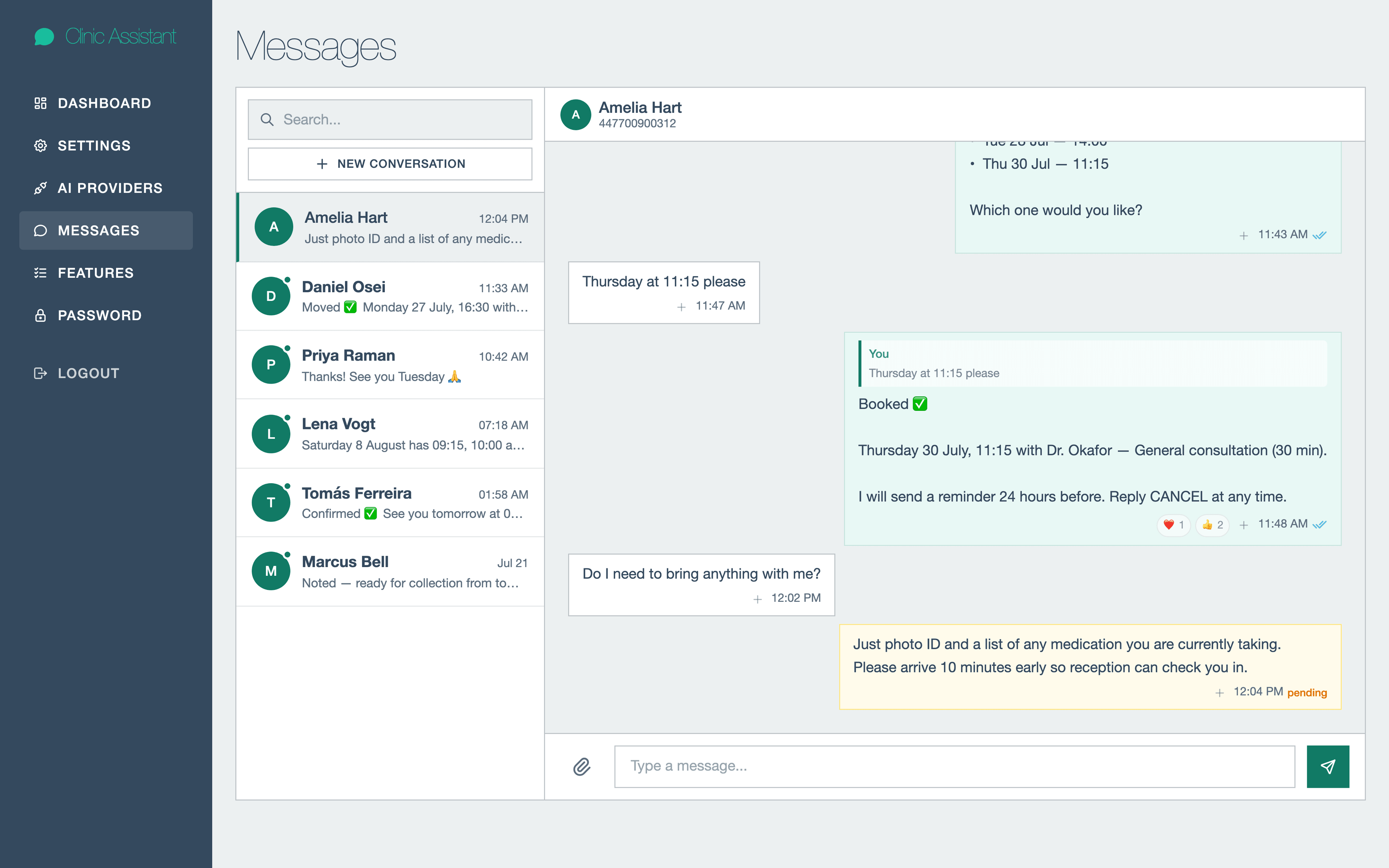
The inbox always shows whether a reply came from the assistant, was approved by a person, or was written manually. Staff can step in without asking the patient to change channels or restart the conversation.
Designed around the appointment
The assistant focuses on a narrow job: booking, rescheduling, cancelling, and reminding. The setup flow asks for clinic hours and appointment preferences in plain language, while the dashboard keeps conversations and upcoming actions in one place.
Relai is a private project; this page presents the product experience without publishing its implementation.
A booking from both sides
For a patient, the ideal flow is conversational. They ask for a time, receive available options, confirm one, and get a reminder in the same WhatsApp thread. Rescheduling and cancellation use the same language instead of sending the patient into a separate portal.
For clinic staff, the same interaction appears as a structured appointment and a readable conversation. They can see what the assistant understood, review a draft before it is sent, or take over directly. The patient never has to know which mode the clinic is using.
This paired view is the centre of the product. Automation saves time only when staff can understand and correct it without reconstructing the conversation.
Designing for exceptions
Clinic conversations rarely stay inside a perfect booking script. A patient may describe symptoms, ask about preparation, send a voice note, react to a message, or combine several requests at once. Relai keeps the assistant focused on appointments and makes a human handoff the expected path for anything outside that boundary.
Semiautomatic mode is useful during rollout because it lets the clinic observe drafts before giving the assistant more independence. Manual mode remains available per thread, so one difficult conversation does not disable assistance for everyone else.
Product boundaries
Relai supports scheduling communication; it is not a diagnostic system and does not present generated medical advice as clinical guidance. Clinic policies, availability, and staff decisions remain authoritative.
The product also avoids pretending that automation removes operational work. Someone still owns appointment rules, exceptions, and follow-up. Relai makes that work visible in one inbox and reduces repetitive coordination around it.